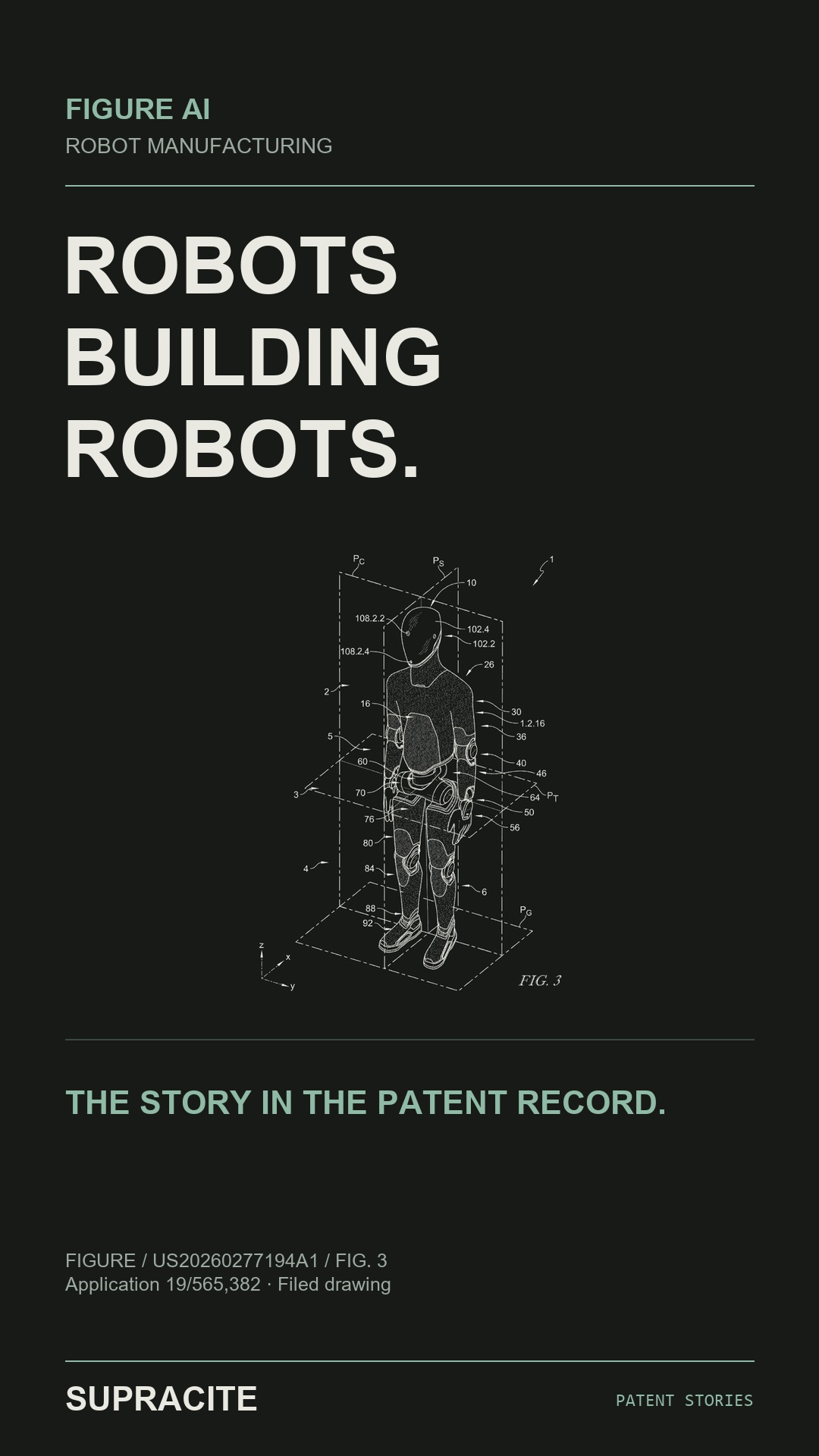
The next robot joins the shift
Most products leave the factory when they are finished. Figure imagines a robot that turns around and joins the line that made it.
Three Figure AI applications published on September 17, 2026 put machinery around that idea: a finished robot can be cleared for work, assigned a manufacturing task and recorded as the builder of later robots. The revealing detail is what happens when something goes wrong. The factory would be able to ask who built the builder—and follow the answer into another generation.12
Figure had already announced robots building robots when it introduced BotQ in March 2025. Today’s filings make a more specific story available: how a factory might expand its robot workforce without losing track of which machines are qualified, what work they performed and which later products might carry their mistakes.91
Who built the builder?
Factories already trace components and manufacturing operations. A robot might have a record of its motors, the tools used to tighten its joints and the measured torque. Figure’s main application, US20260277194A1, adds another link: when a robot performs a manufacturing operation, the new robot’s record points to that worker’s own manufacturing record.1
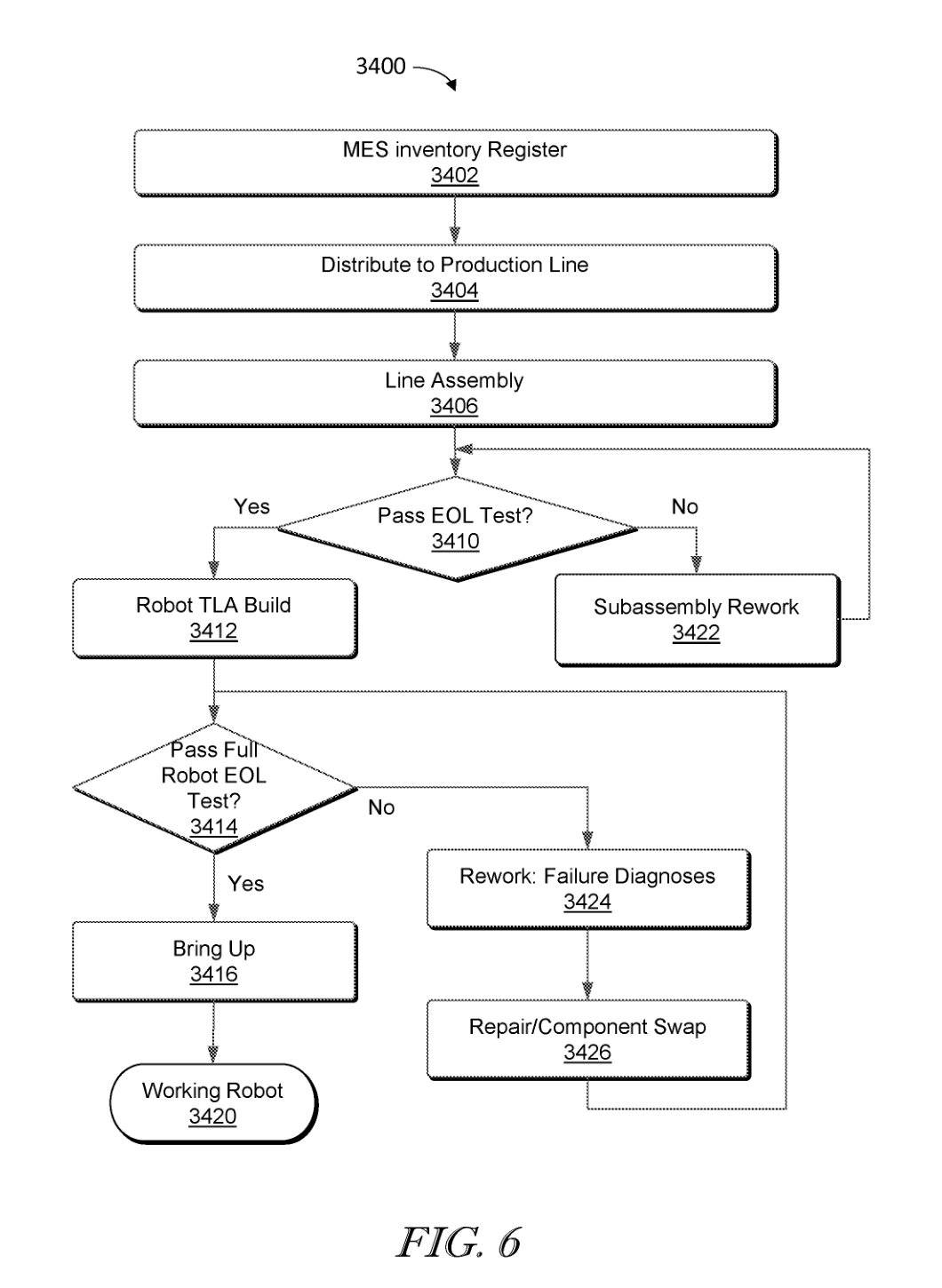
Imagine robot A helping assemble B. Later, B helps assemble C. If A’s work is found to have introduced a defect into B, the useful question extends beyond recalling B: did B’s condition affect the work it did on C? The proposed genealogy gives investigators a route through those relationships. This is an illustrative example of the record structure, not a reported Figure incident.1
Claim 1 centers on that recursive record. Dependent claim 3 adds a consequential response: a defect associated with a robot worker can trigger a quality hold for robots it manufactured, and for subsequent robots manufactured by those held robots. A hold identifies units needing attention; it does not establish that every descendant has the defect.1
That is the interesting tension in a robot factory that grows its own workforce. More builders can increase capacity. They can also carry an unresolved manufacturing problem into more manufacturing. Traceability gives the factory a way to find where the problem may have traveled.
A finished robot still needs clearance to work
The companion US20260277253A1 describes the administrative moment when a product becomes a worker. The system checks release conditions, reclassifies the robot as a manufacturing asset, enters it in a workforce registry alongside human workers, and selects a task using its capabilities.2
That is a more practical transition than simply switching on a new pair of hands. Passing final assembly does not automatically qualify a robot for every task in the building. The registry gives production software somewhere to record what it can do and assign suitable work. A dependent claim also allows degraded performance to trigger maintenance and redirect the task to a human or another robot.2
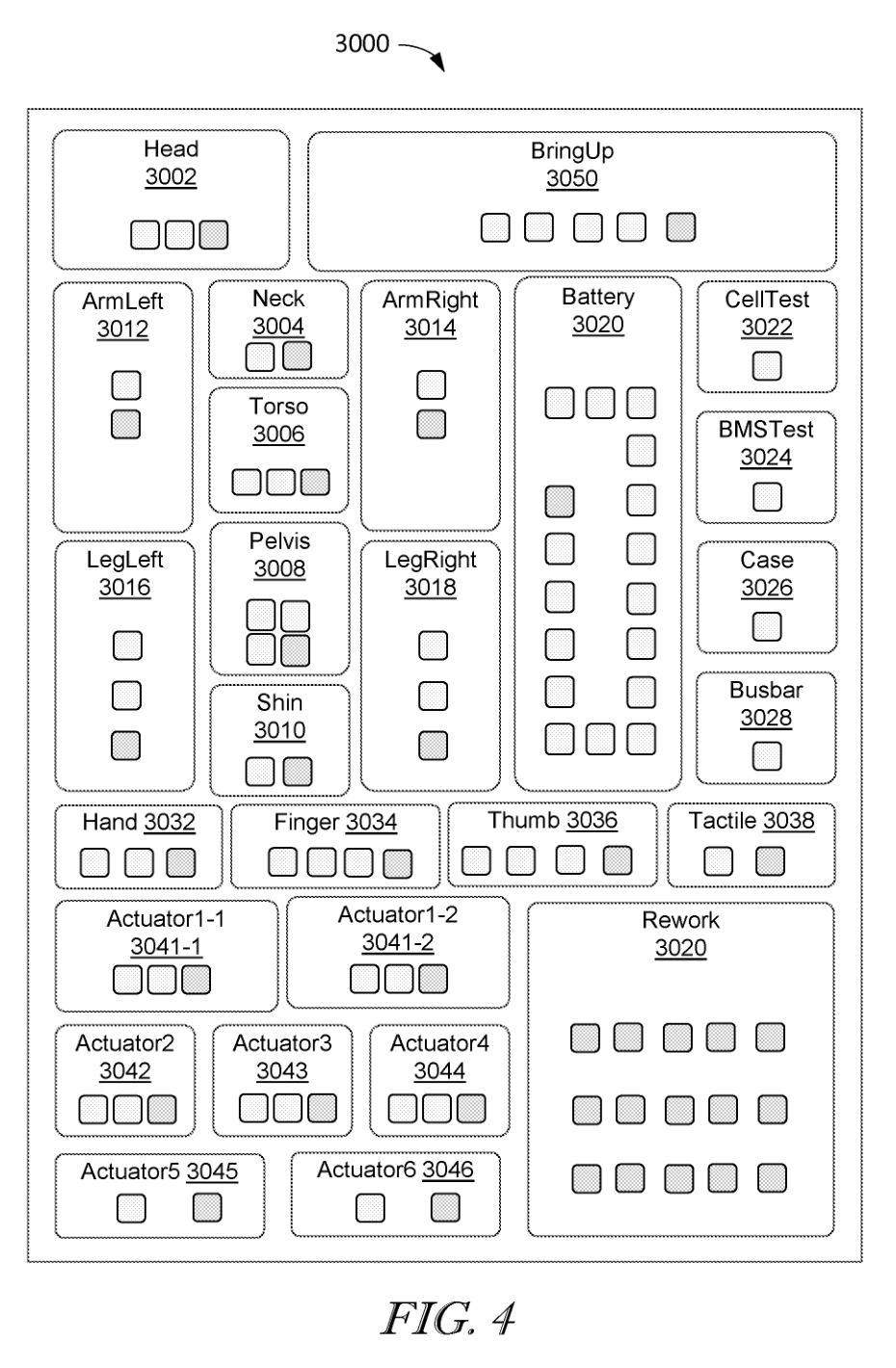
Figure 4 places the idea inside a factory with distinct work areas. The disclosure still depends on components, tools, fixtures, power and production infrastructure. A robot helping build another robot is one contribution to that system; it does not amount to a machine reproducing from raw materials without a supply chain.1
Look at your hand. Check where it is.
The other memorable part of the main filing comes near the end of production. An activated robot can help finish itself.
For calibration, the specification describes using onboard cameras to observe its own hand or foot, comparing the observed position with the position predicted by its kinematic model, then recording offsets. The machine is checking the relationship between what its sensors say, what its model predicts and where its body actually appears. Figure 8 depicts a supported robot; onboard measurement does not imply an absence of factory fixtures.1
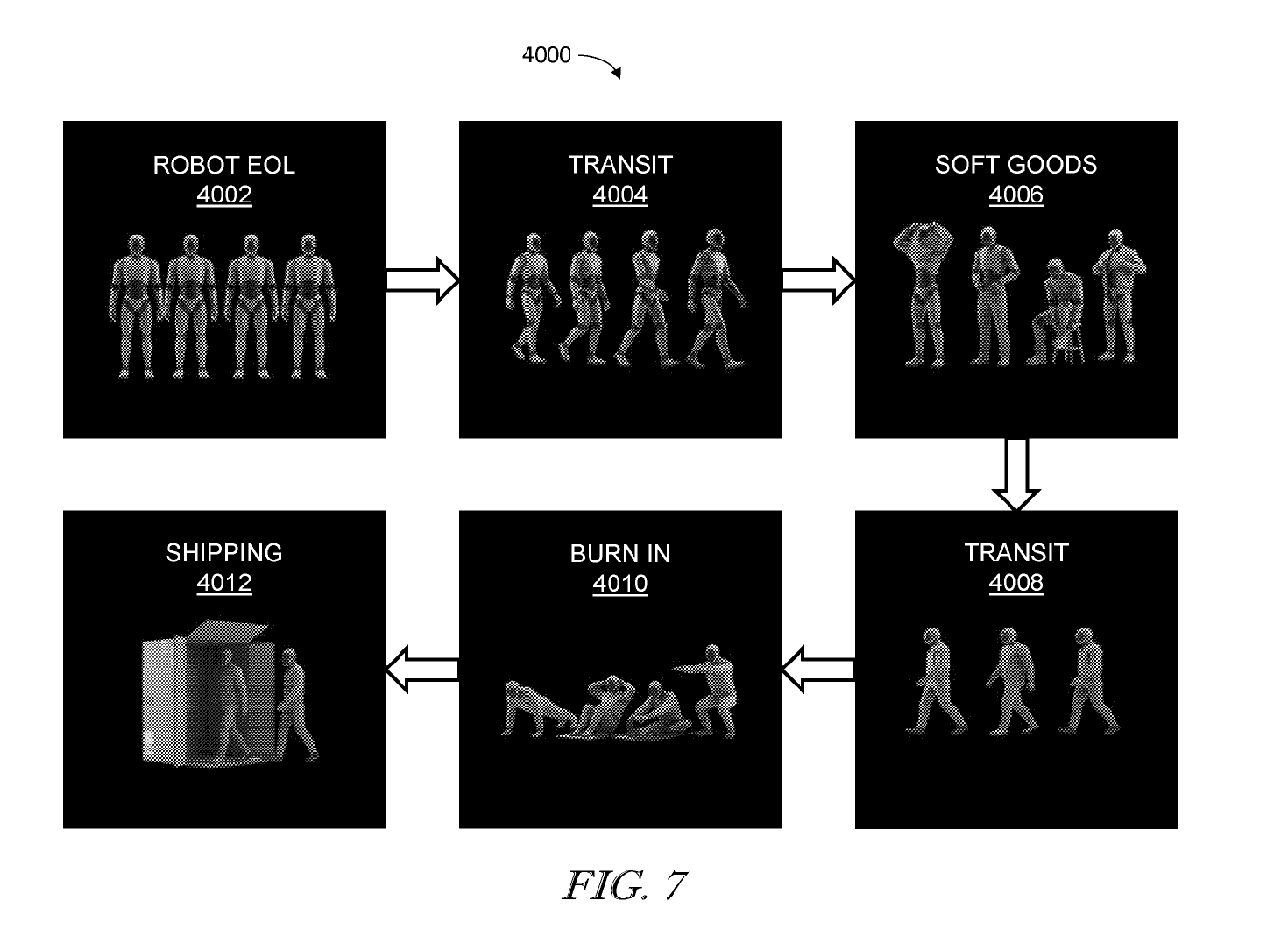
Figure 7 puts calibration beside three other proposed jobs: applying a body covering, performing stress tests and getting into a shipping container. Independent claim 9 requires at least one of the listed operations. It does not require every robot to perform all four.1
The payoff is easy to picture: the robot’s ability to perceive and move its body can reduce some of the separate handling needed to turn an assembled machine into a finished product. The patent supplies the proposed operations, not a measured saving in production time.
Put on a cover. Test again.
Even getting dressed creates an engineering problem. A covering that changes a joint’s resistance can change how the finished robot moves.
The third publication, US20260273751A1, proposes measuring an actuated joint before installing a cover, measuring it again afterward and using the difference to assess interference. The robot that passed a test without its covering may need a different assessment once the covering is fitted.3
Its burn-in claims address another factory judgment: when has a component run long enough? Claim 15 proposes repeated cycles and a stability indicator derived from a performance measurement, ending burn-in when the indicator converges. Dependent claims identify measurements such as torque ripple and thermal rise, and allow worsening performance to terminate the test with failure.3
This gives the factory a proposed stopping rule tied to the individual component’s behavior. It still depends on choosing useful measurements and thresholds. Convergence alone is not evidence that every relevant failure mode has been eliminated.
The final task is its own box
The shipping example is wonderfully literal. The specification describes a robot backing into a fixed box with fitted foam supports for its head, torso, arms, legs and feet. It can report its final status and perform a controlled shutdown.1
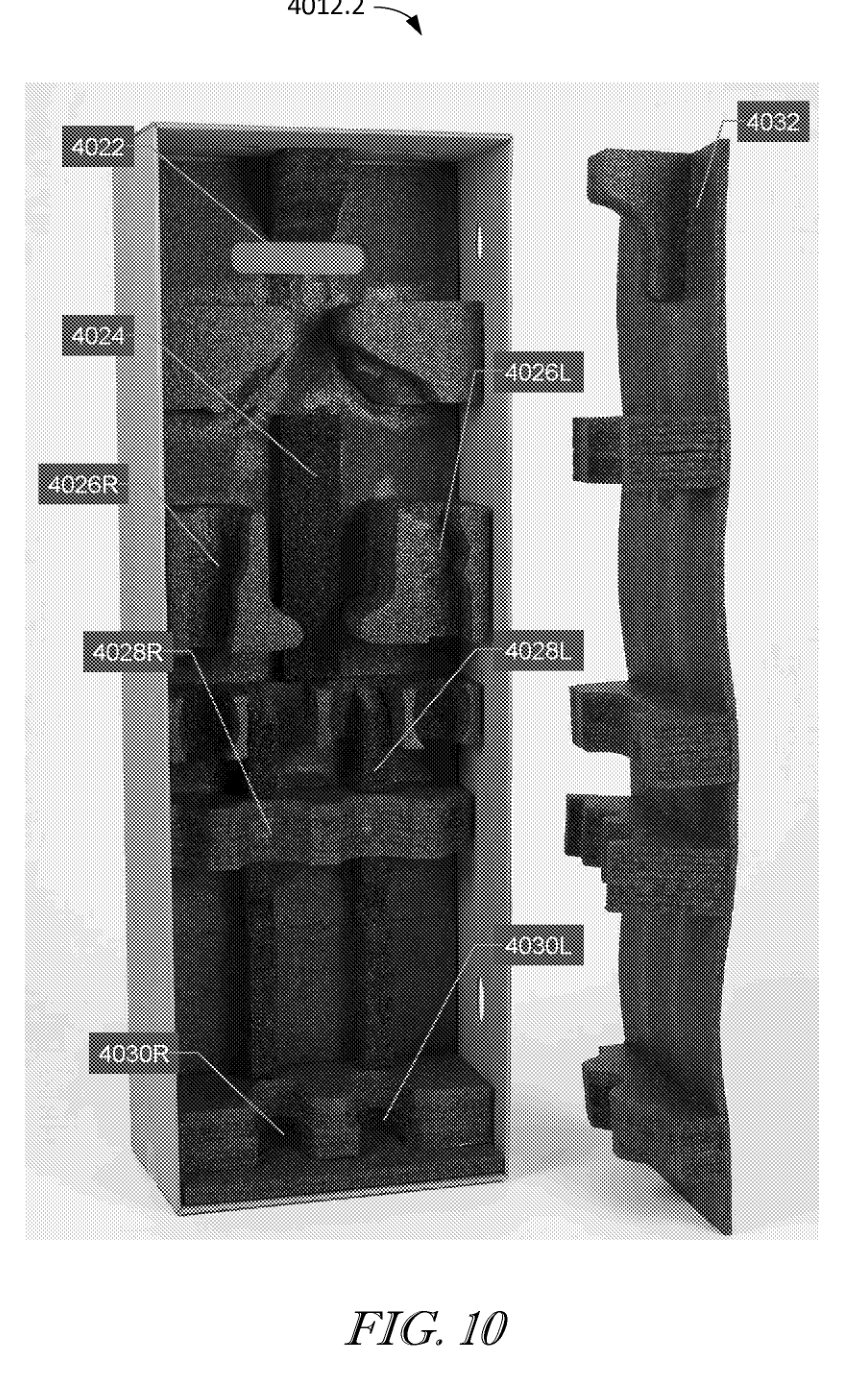
Figure 10 gives that last movement a physical destination. Other passages describe perceiving the container’s geometry and planning a collision-free path into its supports. Getting into the packaging becomes a motion-planning task instead of requiring someone to lift and arrange the entire robot.1
The filing leaves a final job for somebody else: another robot or a human can close the foam cover and box. It is a useful detail because it shows the proposed division of labor at the end of the line.1
A learning factory needs evidence from the floor
The main application also proposes an interface between production management and robots’ vision-language-action models. Tasks go out; outcomes come back; manufacturing records connect the two. Other passages describe using production and field-performance data to improve later models and processes.1
That makes the genealogy more useful than a static family album. If certain operations performed by a particular builder correlate with downstream failures, the factory can investigate that builder, change its assignments or revise the process. A proposed natural-language reasoning trace is one record of a robot’s operation; it cannot substitute for measurements showing that the joint, component or finished machine meets its requirements.1
Figure reported in April that Figure 03 production had reached one robot per hour. That is the company’s production account, not verification that this recursive workforce, genealogy system and self-completion suite are all operating together.10
The filings offer a concrete way to think about robots building robots: clear the new worker, assign a suitable job, measure the result and preserve the trail. Whether the loop produces a better factory will depend on what those measurements show.
Evidence notes, claim details and open questions
An older ambition, more specific claims
The broad idea is already visible in the original March 12, 2025 provisional. Paragraph 0054 describes newly assembled and activated robots joining the manufacturing line and helping build their counterparts. That provisional, 63/770,654, was also identified in January’s US20260027736A1 publication.45
We therefore would not describe today as the first unveiling of a secret robots-building-robots plan. The September 17 publications provide these particular claim sets and detailed factory proposals. The selected provisional passage confirms the earlier concept; it does not establish that every later claim has full support in that earlier filing.
Sources and review scope
Research through September 17, 2026. The three focal applications—19/565,382, 19/565,304 and 19/565,007—were filed March 12, 2026 and published September 17. This article examines their published claims, selected specification passages and the shared provisional. Publication is not a patent grant.123
All 67 documents indexed across those three U.S. files and provisional 63/770,654 were downloaded. The checked inventory has 60 documents with extracted text and 7 skipped extraction records. Acquisition is broader than substantive review: the citations identify the passages actually used. We have not reviewed every branch of the large connected Figure patent family.
The family panel preserves patent-platform’s native SVG. It maps relationships among patent applications; the builder genealogy described in the article is a separate, proposed factory database. Original publication PDFs and filed drawings are hosted with this article. Huiying Zheng, Vadim Chernyak and Brett Adcock signed inventor declarations; Casey G. Campbell signed the application data sheet. Their document links appear in the people panel.687